How we handle a burst pipe in your home
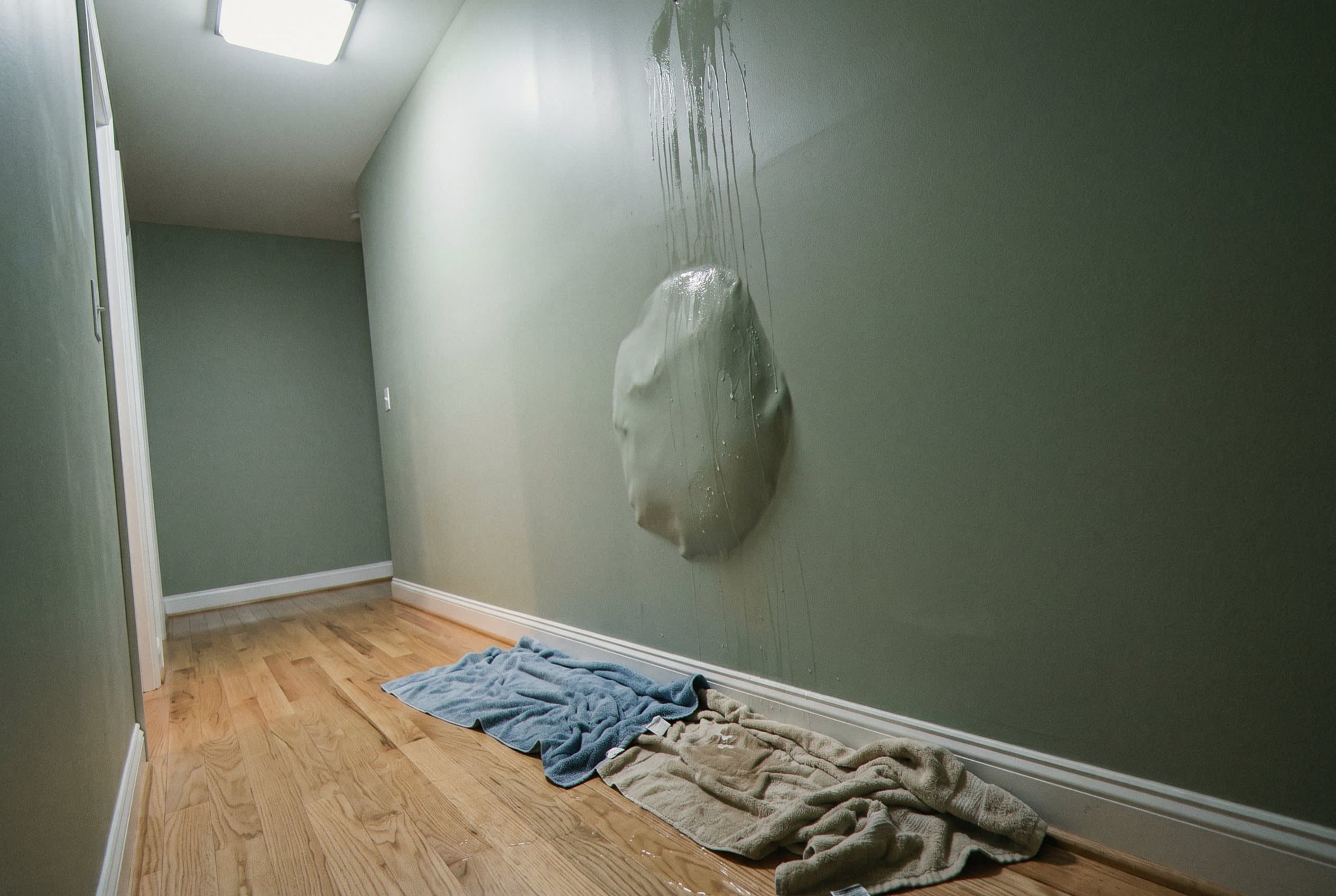
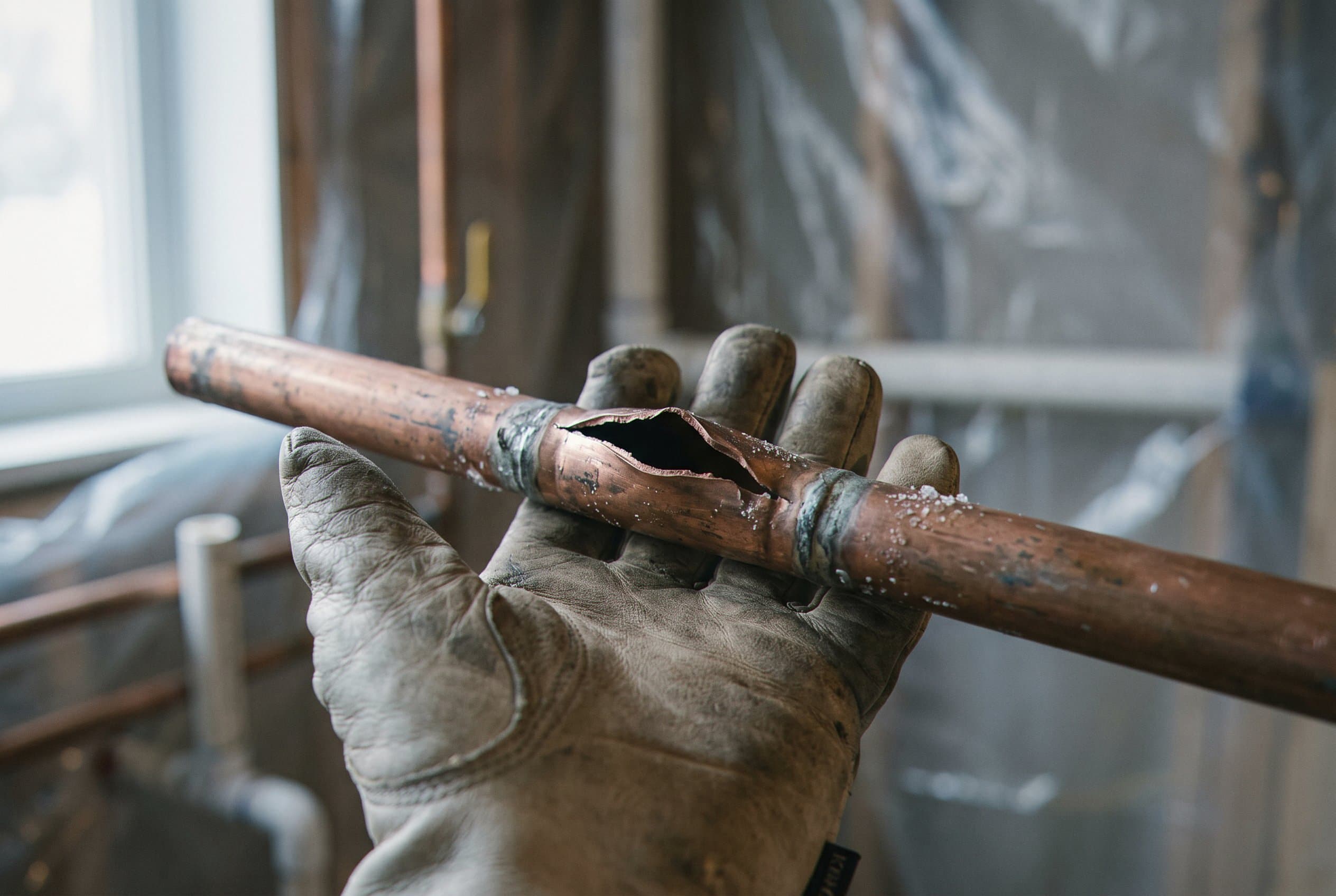
When a pipe lets go, water does not wait. One split line can flood a finished basement in hours, running down through ceilings and soaking into the walls before anyone is awake to notice. Overland Park winters bring long stretches of hard freeze, and the pipes most at risk run through crawl spaces, outside walls, and the cold corners of the basement. Water sits there, freezes, and swells until the copper or the fitting splits apart. A break on an upper floor is the worst kind, since it feeds every level below it. We arrive and shut the flow off at the main, then trace the line back to the spot that failed, whether it hides behind drywall or up in a ceiling. After that, the clock on drying is what matters most. Every hour the water sits, it works deeper into framing, subfloor, and drywall.
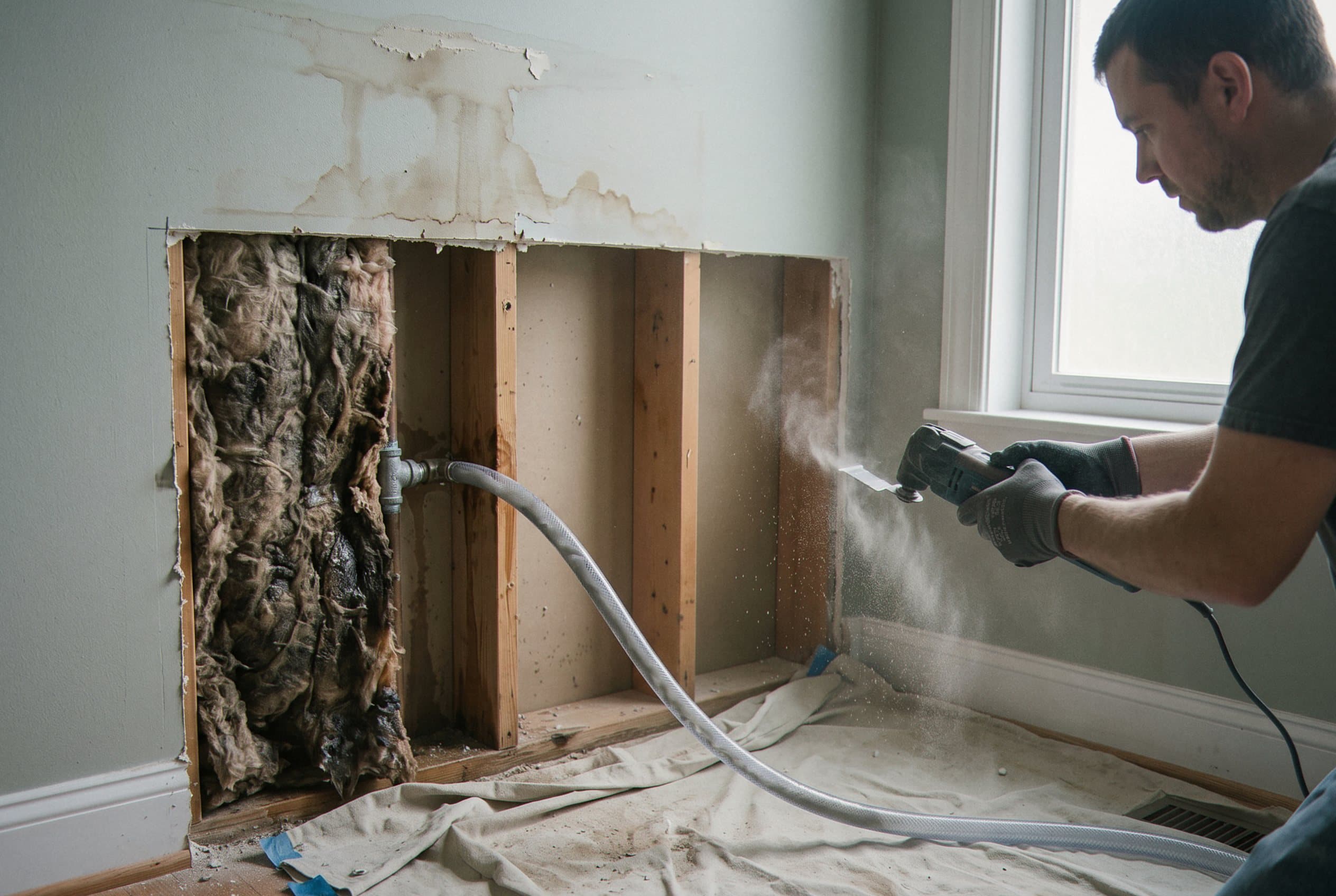
Our crew comes ready to work the moment we walk in. We pull the standing water with industrial extractors, lift soaked carpet and pad where it cannot be saved, and open wall cavities only as far as the water actually went. Then we set air movers and dehumidifiers and let them run, checking moisture readings in the framing and the subfloor each day until the numbers come back to normal. We do not call a job dry because the surface feels dry. Water hides. It slips behind baseboards, under cabinets, and deep inside the wall, so we chase it with meters rather than guesses. When the break sat behind a finished wall or under the slab, we keep the opening small and patch only what we had to touch. You get a clean repair, not a wrecked room.
- We shut the water off and find the failed pipe in the first minutes on site, so the flood stops before it spreads through the rest of the house.
- Fast extraction pulls the standing water out, and that one step decides how much of your floor and framing we can save.
- We dry to a moisture reading, not a hunch. Each day we check the framing and subfloor, so no hidden water gets sealed inside a wall.
- We trace the water everywhere it went: behind baseboards, under cabinets, and through the basement. Not just the puddle you can see.
- Our line is open day or night, because a burst pipe in an Overland Park cold snap cannot wait until morning.
A burst pipe gets worse the longer it waits. Standing water wicks up drywall and swells the subfloor, and within a day or two it sets up the damp, dark conditions that mold needs to take hold. That is why we treat a frozen line as an emergency, not a job that can wait for the next open slot. We stop the source and start extraction on the same visit. Many Overland Park homes sit over full basements, which leaves them exposed, because gravity pulls every gallon from an upstairs break straight down to the lowest finished level. Once the structure reads dry, we move into repair and put back the drywall, trim, and flooring the water ruined. One crew handles all of it. You are not left chasing separate crews across Johnson County to finish what a single pipe started.
A frozen or burst pipe will not dry itself, and the damage only climbs while the water sits. Call us and our crew will come out, stop the flow, pull the water, and dry your home back to normal. We handle burst and frozen pipe cleanup across Overland Park and the rest of Johnson County.